The waters rage and riot;
their rampage fills the sky,
and all we know of quiet
is but the cyclone's eye.
The mountains quake in terror—
then how shall we not fear?
Our broken world's repairer,
why do you not draw near?

And if we have offended,
done evil in your sight,
oh, can it not be mended?
Can nothing be put right?
Remember, Lord, the deluge,
your promise to all things:
Come make for us a refuge
beneath your outspread wings.

Come fill our thirst and hunger;
lift up the lost and poor,
then work a greater wonder
and still the rage of war.
Our strength and our salvation,
our rescue in distress,
though mountain fall and nation,
draw near, draw near to us.
O Son of Heaven, only lord of life,
I offer you the dying and the dead:
the man who turns from burying his wife
to hear his doctor say the cancer's spread,
the children falling silently to earth
in cracks and crevices of toppled stone,
the mother who will not survive the birth,
the young man once more eating all alone.
Take them, O Lord, in venerable hands—
the labor of our hands, the bent world's fruit—
take all the grief and death, O Sorrow's Man:
“This is my body given up for you.”
For we all bow our heads and feast on dust;
we all will drink the cup of bitter tears.
O, take this dented chalice and these crusts
and crawl into each crumb, each drop of fear,
each block of rubble burying the lost,
each cancer cell, each blade that rends the flesh,
each prison wall, each bullet, every cross,
and all the myriad doorways into death:
Imbue them with yourself, O God who bleeds;
take as your skin the many silent roads,
drawn out so every line to your heart leads,
and drown death in your pulse's ebb and flow.
Then we will eat your flesh and drink your blood
in that one meal where all of us take part
until the tide has turned in mercy's flood
and we live on forever in your heart.
As Jesus passed by, he saw a man named Matthew sitting at the customs post. He said to him, “Follow me.” And he got up and followed him. While he was at table in his house, many tax collectors and sinners came and sat with Jesus and his disciples. The Pharisees saw this and said to his disciples, “Why does your teacher eat with tax collectors and sinners?” He heard this and said, “Those who are well do not need a physician, but the sick do. Go and learn the meaning of the words, I desire mercy, not sacrifice. I did not come to call the righteous but sinners.”
What could the prophet want of me?
I speak with Caesar's voice
and eat my meals with hands unclean
from counting out his coins.
But Jesus passed me at my post,
and that was all he said—
just “Follow me,” and I was lost,
and now he shares my bread.

The holy men who spit at me
are gathered at my door
to sneer and crane their necks to see
and judge the wine I pour,
but he has thanked me for the wine
and he has blessed my bread,
and for perhaps the only time
I finally am fed.

I wept to hear his voice in prayer—
I was forgiven then,
and I would follow anywhere
to taste this joy again.
So let the righteous turn away;
they have their sacrifice.
We who have eaten well today
have seen and known the Christ.
When I came to you, brothers, proclaiming the mystery of God, I did not come with sublimity of words or of wisdom. For I resolved to know nothing while I was with you except Jesus Christ, and him crucified. I came to you in weakness and fear and much trembling, and my message and my proclamation were not with persuasive (words of) wisdom, but with a demonstration of spirit and power, so that your faith might rest not on human wisdom but on the power of God. —1 Corinthians 2:1-5
Let me know nothing, Lord, but you,
and let me know you crucified,
to look on all things through your wounds
and see the world then by your light.

So shine on all the feeble, weak,
that weakness is made glorious,
as if a crown for heaven's king
were burning here in mortal dust.

And show me folly through your lens—
refocus my own world-wise eyes
to see the wisdom that upends
and lifts the trampled to the skies;

to see their outstretched, empty hands
as treasures more than what they hold—
as earthen vessels ready stand
to catch where mercy's overflowed;

to know the one who stumbles now
is sharing in your burden, Lord,
for we all falter, falling down
beneath the very weight you bore.

My savior, show me what is true,
that you will raise the felled and marred.
Let me know always, only you,
and know you everywhere you are.
Amphorae stacking: reconstruction of how amphorae might have been stacked on a galley. (Now in Bodrum Castle, Turkey). A galley (from Greek γαλέα galea) is an ancient ship which is entirely propelled by human oarsmen. By Ad Meskens – Own work, CC BY-SA 3.0, https://commons.wikimedia.org/w/index.php?curid=5661567
So they said to him, “Sir, give us this bread always.” Jesus said to them, “I am the bread of life; whoever comes to me will never hunger, and whoever believes in me will never thirst.” –John 6:24-35
I believe, but still I hunger;
Lord, I trust you and I thirst
as if all we have are crumbs here
in the desert of our hurt.
There are days that have no comfort,
nights when all is at its worst,
and we long for signs and wonders,
manna scattered on the dirt.

Bread of life, true bread from heaven,
every day I eat my fill
yet I wake each morning empty,
hunger crying for you still.
Let me take the bread you give me,
take the cup where mercy spills;
let it tell me of forgiveness,
that my cries shall yet be stilled.

For the bread is you, O Savior:
We will eat and we will live,
and the wine we are partaking
is your life upon our lips.
Though I rise again unsated,
let me kneel today for this:
heaven's feast of your own making
that some day shall be my bliss.
That I, Paul, might not become too elated, because of the abundance of the revelations, a thorn in the flesh was given to me, an angel of Satan, to beat me, to keep me from being too elated. Three times I begged the Lord about this, that it might leave me, but he said to me, “My grace is sufficient for you, for power is made perfect in weakness.” I will rather boast most gladly of my weaknesses, in order that the power of Christ may dwell with me. Therefore, I am content with weaknesses, insults, hardships, persecutions, and constraints, for the sake of Christ; for when I am weak, then I am strong. —2 Corinthians 12:7-10
What if the wounds are not like yours,
not scourges, nails, and crown of thorns,
not arrows shot by someone else,
but thorns that grow within my flesh?

Not persecution for your name,
but merely weakness, merely shame?
Can even these poor piercings be
like yours in somehow saving me?

For, Shepherd, see my fleece stained red
from thorns I grow and cannot shed.
Is there still mercy you can grant
if I cannot uproot their plant?

Not by a strength of arm or sword
or show of might were you made Lord,
but riding on an ass and meek
you conquered death when you were weak.

Then let my weakness be as yours
that fell and trampled down death's doors.
Let me accept this death itself
that grows within my very flesh.

Not my strength, then, but yours shall raise
this weak and wounded lamb to grace.
Sufficient is your grace, your love.
My Lord, my God, it is enough.
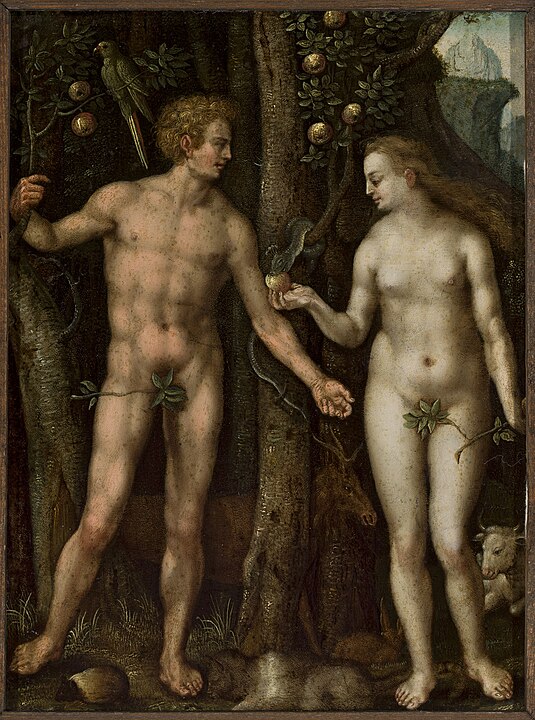
In the shadows of the garden,
I've been hiding in the leaves.
If you see, how will you pardon?
I am Adam; I am Eve.
I am Jonah bound for Tarshish,
but the sea brings no relief.
I am stiff-necked and hard-hearted,
and I'm hanging like a thief.

When you call, how can I answer?
I am naked to your sight.
Do not look at me, O Master;
do not turn on me your eyes.
I have loved the works of shadows;
I have told the world my lies.
All my making is disaster,
and I cannot bear your light.

Further to the shadows driven,
yet you call me, and I come,
and the hands that I have riven
still reach out for me with love.
Like a Father for his children,
you have mercy on our dust.
All there is is this forgiveness;
this is all there ever was.
Summoning them, he began to speak to them in parables, “How can Satan drive out Satan? If a kingdom is divided against itself, that kingdom cannot stand. And if a house is divided against itself, that house will not be able to stand. And if Satan has risen up against himself and is divided, he cannot stand; that is the end of him. But no one can enter a strong man’s house to plunder his property unless he first ties up the strong man. Then he can plunder the house.” —Mark 3:20-35
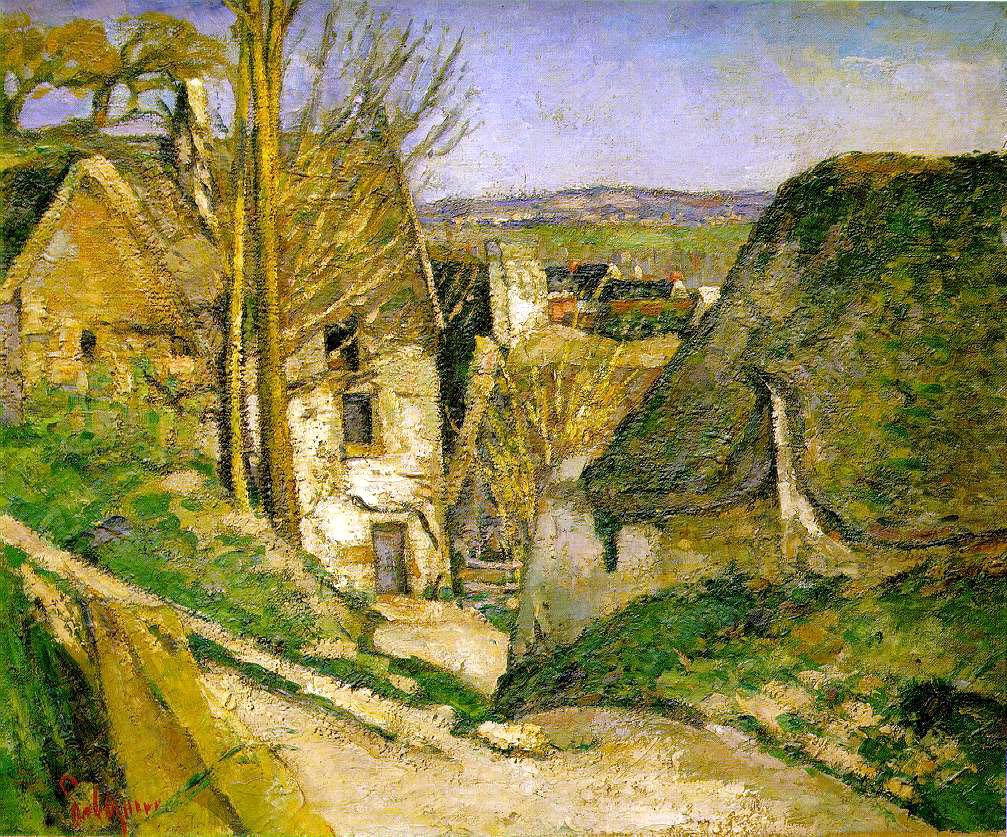
A house divided cannot stand:
The roof will kiss the floor.
When civil war consumes the land,
the kingdom stands no more.

Then how shall I, fragmented heart,
stand upright on my own?
No, I will take my fractured parts
and lay them at your throne.

Come, then, O king and conqueror:
That strong man bind in me.
What plunders me, O plunderer,
bind fast, and set me free.

Drive out the demons driving me;
the space that's left, come fill.
Knit me together, piece by piece,
that I may do your will.

Then I shall be your own, O Lord,
when I at last am mine,
one with the throng before your throne:
Your body, and your bride.



 Kate Bluett
