Bone of Our Bones

So the LORD God cast a deep sleep on the man,
and while he was asleep,
he took out one of his ribs and closed up its place with flesh.
The LORD God then built up into a woman the rib
that he had taken from the man.
When he brought her to the man, the man said:
    “This one, at last, is bone of my bones
        and flesh of my flesh;
    this one shall be called ‘woman, ‘
        for out of ‘her man’ this one has been taken.”
That is why a man leaves his father and mother
and clings to his wife,
and the two of them become one flesh.
Genesis 2:18-24

We come from the dust of the earth,
and back to the dust we shall go
as naked at death as at birth;
our hands shall be empty once more.

So Adam from Eden came forth
to live by the sweat of his brow,
to wrestle with thistle and thorn
until he was laid in the ground.

But, oh, not alone shall he lie,
nor Eve shall not lie there alone,
for sprung from them both came the Christ:
In him all their sorrows are known.

He came to be shaped of the dust
and born of his mother in blood,
to share all our striving with us
and go back again to the mud.

For he is the bone of our bones,
and he is the flesh of our flesh.
No more do we walk on unknown,
but he bears our life and our death

to open the eyes of our hearts
and raise us again to new life
as sinless as back at the start,
to make us forever his bride.

Adam and Eve depicted in a mural in Abreha wa Atsbeha Church, Ethiopia, Photo By Bernard Gagnon – Own work, CC BY-SA 3.0, https://commons.wikimedia.org/w/index.php?curid=27934949

Warp and Weft

And at your name all knees will bend,
all heads will bow to bear your yoke.
O, lay it gently on us then!
Your mercy, Lord, is all my hope,

for all you trusted to my hands,
the blessings on my head you poured,
my hans have twisted from their ends,
my thoughts have beaten into swords.

So when your judgment comes, O Christ,
how will you reckon all I've done,
the broken endings I have spliced
to all the graces you had spun?

Still bend my shoulders to your yoke
as you bent yours to humankind's:
So you restore the things I broke
and pour again your new-made wine.

Still reach your hands out right and left:
No weaver, but a carpenter,
when you stretch out the warp and weft
my crooked ways run straight and sure,

for in your work my work is good.
Your wounded hands hold all my ends
and turn them as I never could
'til swords are plowshares once again.

Weaver, Nearer an Open Windows By Vincent van Gogh – Copied from an art book, Public Domain, https://commons.wikimedia.org/w/index.php?curid=9108043

Broken World

Riffing on Psalm 46:

The waters rage and riot;
their rampage fills the sky,
and all we know of quiet
is but the cyclone's eye.
The mountains quake in terror—
then how shall we not fear?
Our broken world's repairer,
why do you not draw near?

And if we have offended,
done evil in your sight,
oh, can it not be mended?
Can nothing be put right?
Remember, Lord, the deluge,
your promise to all things:
Come make for us a refuge
beneath your outspread wings.

Come fill our thirst and hunger;
lift up the lost and poor,
then work a greater wonder
and still the rage of war.
Our strength and our salvation,
our rescue in distress,
though mountain fall and nation,
draw near, draw near to us.
Thunderstorm near Pritzerbe (Germany) By Mathias Krumbholz – Own work, CC BY-SA 3.0, https://commons.wikimedia.org/w/index.php?curid=26118676SONY DSC

More Than Prophets

At that time, John said to Jesus,
“Teacher, we saw someone driving out demons in your name,
and we tried to prevent him because he does not follow us.”
Jesus replied, “Do not prevent him.
There is no one who performs a mighty deed in my name
who can at the same time speak ill of me.
For whoever is not against us is for us.
Anyone who gives you a cup of water to drink
because you belong to Christ,
amen, I say to you, will surely not lose his reward.”
Mark 9:38-43

Would that all God's own were prophets
burning with the Spirit's flame,
every son and every daughter
given courage to proclaim!
Yet a greater gift is offered,
first and last and all may claim:
Offering a cup of water
to the thirsty, in Christ's name.

All the good things we have treasured
we are given from God's hand;
all the joys of rest and pleasure,
all the gifts of sun and land.
None, though, can we hold forever,
having but to give again.
Breaking heaven's bread together:
We are more than prophets then.

We are mortal; we are sinful,
yet such gifts we have received,
how can we be else than gen'rous
with God's generosity?
Word of God, come dwell within us;
form and shape all we shall be.
Let the love that you have giv'n us
echo in our every deed.

Bernardo Strozzi – An act of mercy, giving drink to the thirsty- http://emuseum.ringling.org/emuseum/objects/18885/an-act-of-mercy-giving-drink-to-the-thirsty?ctx=554eb923-d6df-4234-82e9-e439b2d967fe&idx=1, Public Domain, https://commons.wikimedia.org/w/index.php?curid=66957640

Love

 Love is patient, love is kind. It is not jealous, [love] is not pompous, it is not inflated, it is not rude, it does not seek its own interests, it is not quick-tempered, it does not brood over injury, it does not rejoice over wrongdoing but rejoices with the truth. It bears all things, believes all things, hopes all things, endures all things.
1 Corinthians 13:4-7

Give me love's patience, Lord my God,
when mine is wearing thin,
and let it whisper in my heart
that I have been forgiv'n,
and then love's kindness I will learn
and love's humility
when I have known you will not turn
your love away from me.

Give me the love that hopes all things
when fear says hope is gone,
that knows the Spirit spreads bright wings
o'er every coming dawn,
that bears all things and still believes
that we can be made new,
that can endure the world of griefs
and still rejoice in you.

Beyond all I desire or need,
far, far above all else,
this greatest mercy grant to me:
Give me your very self.
You are the source of all my hope;
you are the end thereof.
All other things are but to know
that you, O God, are love.

Christ Child in the Sacred Heart, Between 1475 and 1480, By Anonymous – https://www.nga.gov/content/ngaweb/Collection/art-object-page.3738.html, Public Domain, https://commons.wikimedia.org/w/index.php?curid=62473824

The Dying and the Dead

O Son of Heaven, only lord of life,
I offer you the dying and the dead:
the man who turns from burying his wife
to hear his doctor say the cancer's spread,
the children falling silently to earth
in cracks and crevices of toppled stone,
the mother who will not survive the birth,
the young man once more eating all alone.
Take them, O Lord, in venerable hands—
the labor of our hands, the bent world's fruit—
take all the grief and death, O Sorrow's Man:
“This is my body given up for you.”
For we all bow our heads and feast on dust;
we all will drink the cup of bitter tears.
O, take this dented chalice and these crusts
and crawl into each crumb, each drop of fear,
each block of rubble burying the lost,
each cancer cell, each blade that rends the flesh,
each prison wall, each bullet, every cross,
and all the myriad doorways into death:
Imbue them with yourself, O God who bleeds;
take as your skin the many silent roads,
drawn out so every line to your heart leads,
and drown death in your pulse's ebb and flow.
Then we will eat your flesh and drink your blood
in that one meal where all of us take part
until the tide has turned in mercy's flood
and we live on forever in your heart.


Memento mori. Gravestone inscription (1746). EdinburghSt. Cuthbert’s Churchyard. Photo By Daniel Naczk – Own work, CC BY-SA 4.0, https://commons.wikimedia.org/w/index.php?curid=51699963 Exif_JPEG_PICTURE

Want

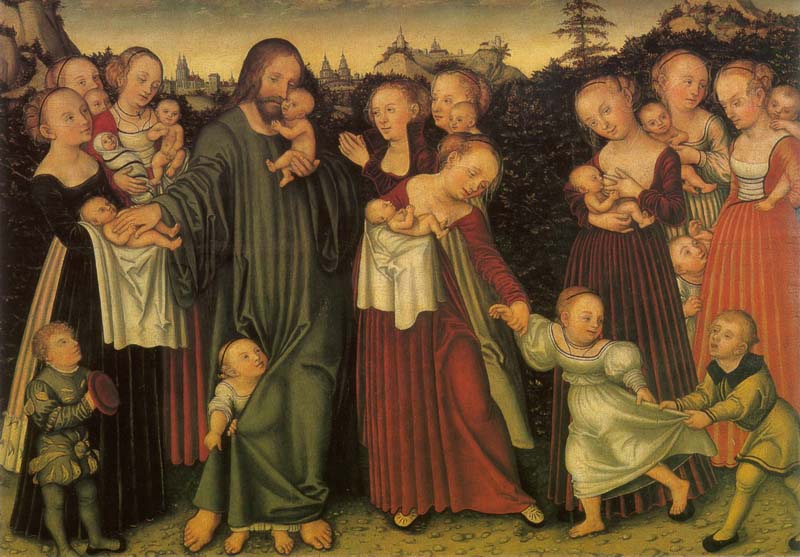
Then he sat down, called the Twelve, and said to them,
“If anyone wishes to be first,
he shall be the last of all and the servant of all.”
Taking a child, he placed it in their midst,
and putting his arms around it, he said to them,
“Whoever receives one child such as this in my name, receives me;
and whoever receives me,
receives not me but the One who sent me.”
Mark 9:30-37

I want to serve you, Lord my God,
to do what you command,
to rule the world with staff and rod,
to sit at your right hand.
But you ask me to be the least
while others' needs are filled,
to serve your children at your feast,
when I am hungry still.

I want to follow you, O Lord,
forever chase your light
to trace your steps down every road
and with you climb the heights.
But you go towards Jerusalem;
you know that way is death.
How can I take the road again
beyond my final breath?

I want to love you, O my Christ,
and love without regret,
to look at last into your eyes
and find myself in them.
My downward road lift up on high;
my crooked ways make straight,
that when your death becomes my life,
my life becomes your praise.

Christ blessing the Children by Lucas Cranach the Youngerhttp://www.botschaftderwoche.de/pics/bild061008.jpg, Public Domain, https://commons.wikimedia.org/w/index.php?curid=22737097

Matthew, the Tax Collector

As Jesus passed by,
he saw a man named Matthew sitting at the customs post.
He said to him, “Follow me.”
And he got up and followed him.
While he was at table in his house,
many tax collectors and sinners came
and sat with Jesus and his disciples.
The Pharisees saw this and said to his disciples,
“Why does your teacher eat with tax collectors and sinners?”
He heard this and said,
“Those who are well do not need a physician, but the sick do.
Go and learn the meaning of the words,
I desire mercy, not sacrifice.
I did not come to call the righteous but sinners.”

Matthew 9:9-13

What could the prophet want of me?
I speak with Caesar's voice
and eat my meals with hands unclean
from counting out his coins.
But Jesus passed me at my post,
and that was all he said—
just “Follow me,” and I was lost,
and now he shares my bread.

The holy men who spit at me
are gathered at my door
to sneer and crane their necks to see
and judge the wine I pour,
but he has thanked me for the wine
and he has blessed my bread,
and for perhaps the only time
I finally am fed.

I wept to hear his voice in prayer—
I was forgiven then,
and I would follow anywhere
to taste this joy again.
So let the righteous turn away;
they have their sacrifice.
We who have eaten well today
have seen and known the Christ.

The Calling of Saint Matthew, 1599–1600, Caravaggio By Caravaggio – Self-scanned, Public Domain, https://commons.wikimedia.org/w/index.php?curid=15219497

Apple

“Do you see this woman?
When I entered your house, you did not give me water for my feet,
but she has bathed them with her tears
and wiped them with her hair.
You did not give me a kiss,
but she has not ceased kissing my feet since the time I entered.
You did not anoint my head with oil,
but she anointed my feet with ointment.
So I tell you, her many sins have been forgiven;
hence, she has shown great love.
But the one to whom little is forgiven, loves little.”
Luke 7:36-50

The righteous men refused to eat the apple—
their eyes were never opened to their sin.
They never got down in the mud to grapple
with all the filth that comes out from within.

But she has tasted, and she knows its flavor:
The skin was red and firm beneath her touch,
and it was sweet—the sweetest—so she savored,
and well she knows she is forgiven much.

Then why should she withhold the alabaster?
No, let her perfumed prayer like incense rise,
and let them stare, though none will dare to ask her
what is it draws this torrent from her eyes?

They sit at feast, yet they have tasted nothing
except their scorn to see her at his feet,
but she is sated with her Lord's anointing,
for here is something more than apples sweet

and only they who taste and they who hunger
will one day know the pleasure of that feast,
when he who came to seek them in the mud here
bows down himself to wash their dirty feet.

The Ointment of the Magdalene (Le parfum de Madeleine). James Tissot, c. 1900 – Online Collection of Brooklyn Museum; Photo: Brooklyn Museum, 2007, 00.159.214_PS2.jpg, Public Domain, https://commons.wikimedia.org/w/index.php?curid=10957535

Some Mother’s Son

Jesus journeyed to a city called Nain,
and his disciples and a large crowd accompanied him.
As he drew near to the gate of the city,
a man who had died was being carried out,
the only son of his mother, and she was a widow.
A large crowd from the city was with her.
When the Lord saw her,
he was moved with pity for her and said to her,
“Do not weep.”
He stepped forward and touched the coffin;
at this the bearers halted,
and he said, “Young man, I tell you, arise!”
The dead man sat up and began to speak,
and Jesus gave him to his mother.
Luke 7:11-17

Some mother's son, they carried him
out of the city gates
and met the prophet coming in,
but coming there too late.

A mother's son himself, he stopped—
What was it he beheld?
Him mother, weeping her own loss,
and on the bier, himself?

The days when he had thought his strength
invincible were past,
and numbering his own days' length,
he could not call them back.

Not if the angels of the sky
bore him upon their wings
could he recall the days gone by
or stop their hurrying.

His mother—would she weep like this
or stand in silent grief
that her days should outnumber his?
He won't be there to see.

For her sake, no! But this he can:
The breath begins to stir.
He takes the dead man's living hand
and gives him back to her.

Brooklyn Museum – The Resurrection of the Widow’s Son at Nain (La résurrection du fils de la veuve de Naïm) – James Tissot – overall – Online Collection of Brooklyn Museum; Photo: Brooklyn Museum, 2008, 00.159.115_PS2.jpg, Public Domain, https://commons.wikimedia.org/w/index.php?curid=10195957